| Choking |
Recognizing Obstruction
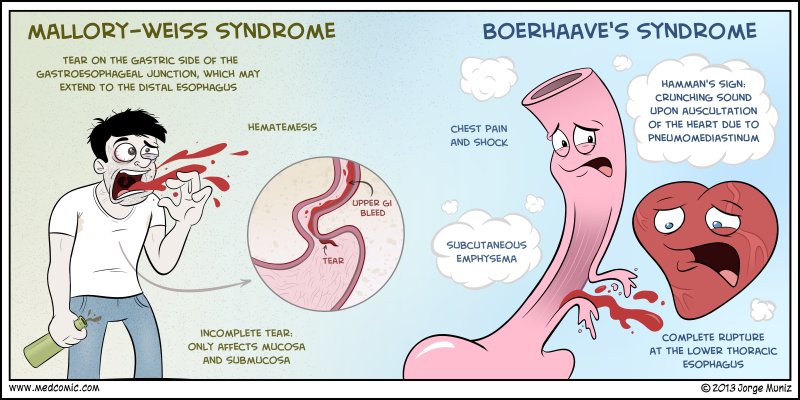
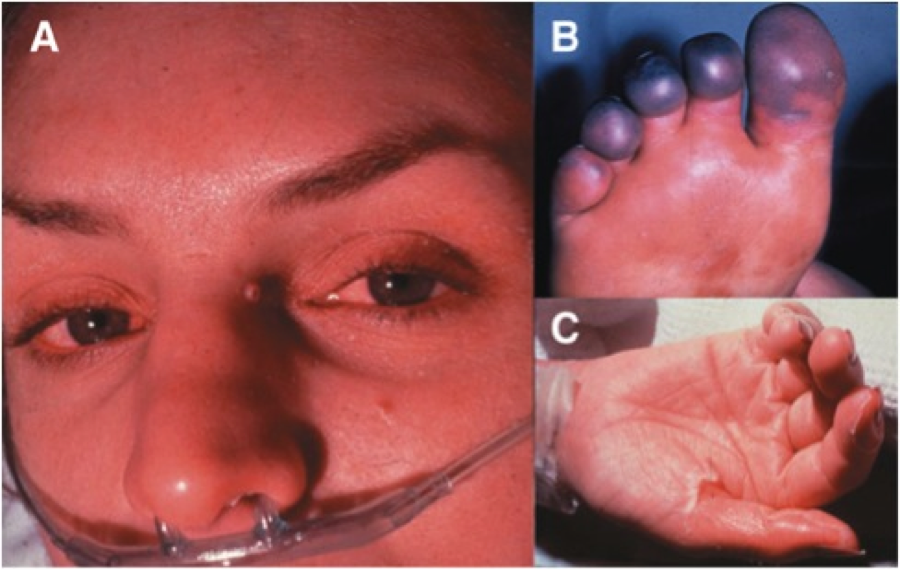
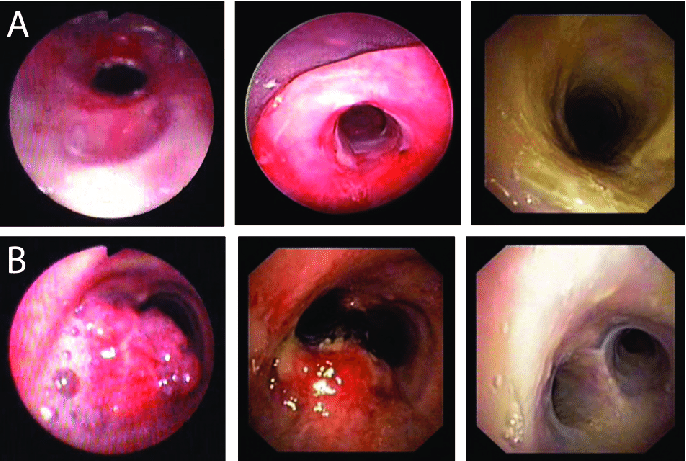
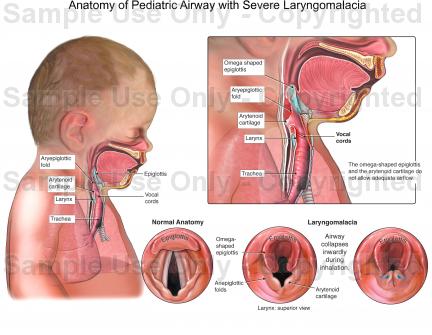
- A conscious patient who is choking will often clutch the neck between the thumb and forefinger and may show loss of voice, shortness of breath, inspiratory stridor (harsh, high-pitched breathing sound caused by a narrowed or blocked upper airway), a weak cough, cyanosis (pale, blue lips, skin, tongue and/or blue fingers), and, eventually, loss of consciousness.
Forceful cough
- If the patient can cough forcefully and speak, the obstruction is partial, and no intervention should be performed other than encouraging the patient to cough: A strong cough is the most effective way to remove a foreign body in these cases.
Heimlich manoeuvre
Conscious
- Begin with five back blows to aid expulsion of the foreign body, keeping the patient leaning forward and supported with one hand on the chest, with the rescuer standing to the side of the patient.
- A sudden subdiaphragmatic abdominal thrust can also force air out of the lungs and produce a cough capable of expelling the foreign body (see different ways for different age groups).
Standing or seated patient
- The rescuer stands behind the patient and wraps their arms around the patient’s waist, placing a clenched fist with the thumb side toward the patient’s abdomen on the midline just above the navel. With the other hand, the rescuer grasps the fist and delivers strong upward thrusts against the patient’s abdomen. Thrusts should be repeated until the foreign body is expelled from the patient’s airway.
Lying on the ground
- With the patient lying flat on ones back with ones face and torso pointing upwards, place the palms of the hands one over the other above the patient’s navel and perform quick abdominal thrusts toward the diaphragm in the midline to remove the airway obstruction.
Lying on the ground but has lost consciousness
- The rescuer should suspect foreign body airway obstruction when repeated rescue breaths do not produce the expected chest rise.
In that case:
- Hyperextend the head and lift the chin.
- Open the mouth, inspect the oral cavity, remove any visible foreign bodies, and try ventilating again.
- If the chest still does not rise, perform the Heimlich maneuver with the patient supine to remove any foreign bodies in the airway that are not visible in the mouth.
Medscape
Remove any visible foreign body in the airways and then preform the following:
Adults
Older Children
Baby or Young child
|
| Fainting |
- Do a primary survey
- Check if surrounding area is safe
- Check if patient is responding by shouting at them and check if respond.
- Place the patient on his/her back, facing up (if can’t lie down, then sit them down placing their head between their knees to restore blood to the brain).
- If patient is feeling faint and is standing ask them to cross their legs and hold abdominal muscles especially in crowded places, this is a temporary measure one needs to ideally sit and/or or lie down.
- When lying down where possible place their legs about 12 inches above heart/ to head level to restore blood flow to the brain
- Try to loosen all belts, collars, ties and any restrictive clothing.
- Under normal circumstance a person will remain consciousness within 1 minute, if longer than one minute place in a recovery position and call for an ambulance.
|
| Unconscious and not breathing |
- Do a primary survey
- Check if surrounding area is safe
- Check if patient is responding by shouting at them
- Phone for an ambulance
- Check breathing by tilting head backwards and look and feel for breaths (check if there are chest rises: adults 2 rises or child 4 rises or baby 6 rises per 10 seconds), if not:
- Do CPR
- Only stop CPR if one is tired, handing over to Medical healthcare professional upon their instruction or if there is sign of life
|
| If not sure if breathing |
- Do a primary survey
- Check if surrounding area is safe
- Check if patient is responding by shouting at them
- Phone for an ambulance.
- Check breathing by tilting head backwards and look and feel for breaths.(check if there are chest rises: adults 2 rises or child 4 rises or baby 6 rises per 10 seconds), if not:
- If still unsure do CPR .
- Only stop CPR if one is tired, handing over to Medical healthcare professional upon their instruction or if there is sign of life.
- If breathing : Support the head and neck and ask others or oneself to carefully Move (roll) the person on their side in to a recovery position (if a baby: recovery position) and tilt their head back to protect their airway
|
| If vomiting within body |
- Do a primary survey
- Check if surrounding area is safe
- Check if patient is responding by shouting at them
- Phone for an ambulance.
- Support the head and neck and ask others or one to carefully move (roll) the person on their side in to a recovery position (if a baby: recovery position) and tilt their head back to protect their airway.
- Check breathing by tilting head backwards and look and feel for breaths.(check if there are chest rises: adults 2 rises or child 4 rises or baby 6 rises per 10 seconds).
- If stop breathing do CPR
- Only stop CPR if one is tired, handing over to Medical healthcare professional upon their instruction or if there is sign of life
|
| Unconscious and breathing |
- Do a primary survey
- Check if surrounding area is safe
- Check if patient is responding by shouting at them
- Phone for an ambulance.
- Support the head and neck and ask others or oneself to carefully Move (roll) the person on their side in to a recovery position (if a baby: recovery position) and tilt their head back to protect their airway.
- Check breathing by tilting head backwards and look and feel for breaths.(check if there are chest rises: adults 2 rises or child 4 rises or baby 6 rises per 10 seconds)
- If stop breathing do CPR
- Only stop CPR if one is tired, handing over to Medical healthcare professional upon their instruction or if there is sign of life
|
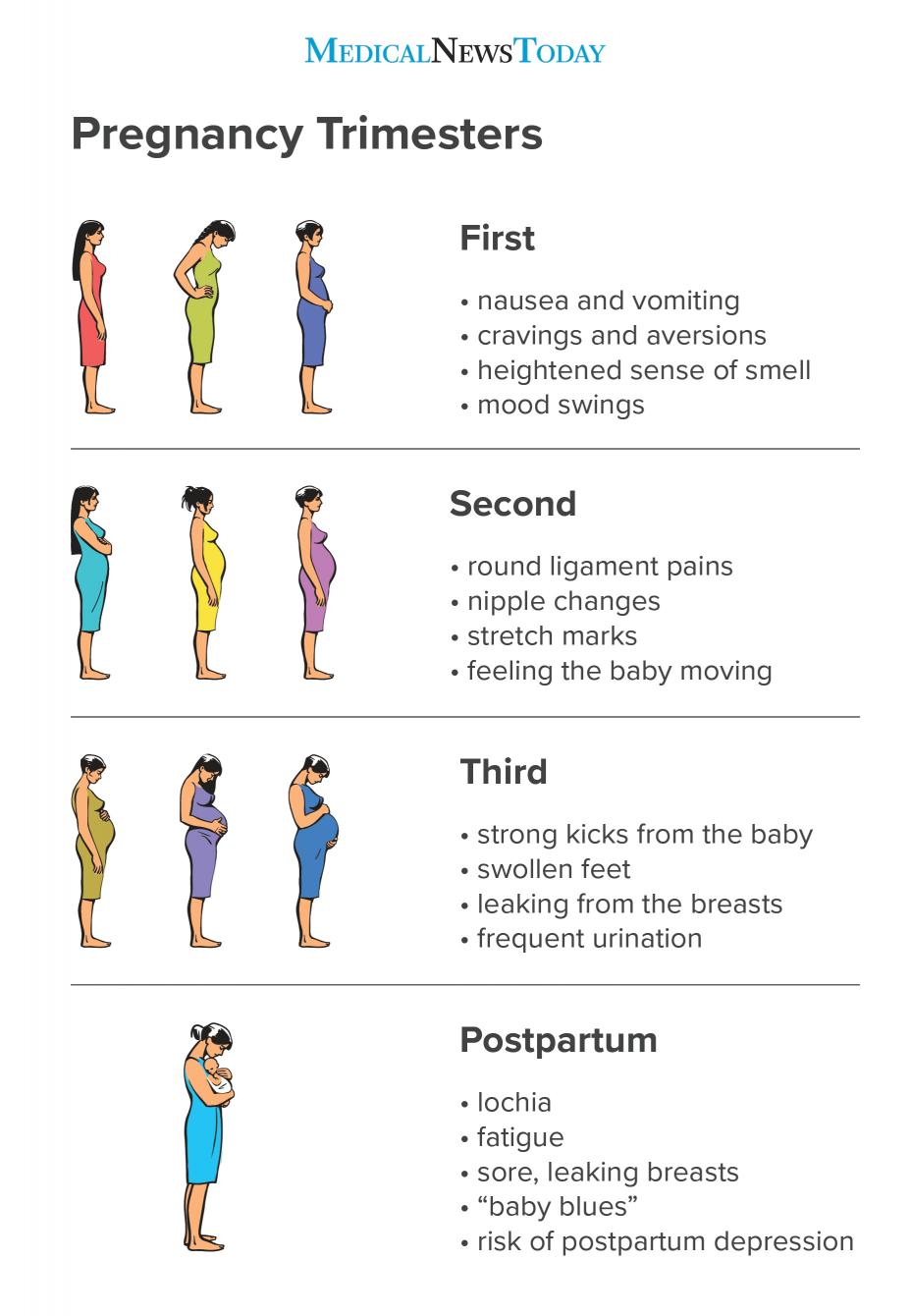
| Pregnant : Unconscious and Breathing (Unique recovery position) |
- Do a primary survey
- Check if surrounding area is safe
- Check if patient is responding by shouting at them
- Phone for an ambulance.
- ‘The Resuscitation Council advises on collapse where the pregnant woman was unconscious but breathing, she should be placed in a left lateral tilt of 15 degrees to relieve compression of this artery and not in a full recovery position as you would with anyone else’
https://www.netmums.com/coffeehouse/other-chat-514/
netmums-users-noticeboard-185/1021056-safe-recovery
-position-during-pregnancy.html
- An unconscious casualty who is heavily pregnant you should attempt to roll them onto their left side in a semi recovery position (do not push them all the way to the left hand side).
- This prevents the baby from compressing one of the main blood vessels in the abdomen.
www.firstaidforfree.com
- Keep their legs apart (see if someone else can help) when moving patient to recovery position and place a pillow or jacket between their legs once in a semi recovery position.
NPA flu vaccination training 29/10/19 1pm.
- Check breathing by tilting head backwards and look and feel for breaths.(check if there are chest rises: adults 2 rises per 10 seconds)
- If stop breathing do CPR
- Only stop CPR if one is tired, handing over to Medical healthcare professional upon their instruction or if there is sign of life
|
| Fallen or suspect damage to their head and/or neck and/or spine and/or damaged/broken arm and/or hip and/or leg. |
|
| Seizure |
- Ensure you are not in danger;
- If the person responds to instructions, move them to a quiet, private area and (preferably) sit them on the floor. If they do not respond to instructions, do not attempt to move them;
- Protect the person from harm. Look to remove nearby hazards that could hurt them. Guide the person, but never attempt to force or restrain them;
- Supervise the person at all times. If possible, try to cushion their head;
- Never put anything in the mouth of someone having a seizure;
- Try to ensure the person’s dignity is maintained (they may lose bladder control);
- Call an ambulance if the person has repeated seizures, if they injure themselves during a seizure, or if this is their first seizure;
- If the person is known to have epilepsy, start timing the seizure. If the seizure lasts two minutes longer than normal (or five minutes if you do not know how long the seizure usually lasts), call an ambulance;
- Once the seizure is over, do not attempt to ‘bring round’ the person by any method. If they are unconscious, place them in the recovery position;
- Once the person is conscious, speak calmly and tell them what happened.
- The person should not be given food or drink until they have recovered fully.
The Pharmaceutical Journal, PJ, 4/11 April 2015, Vol 294, No 7856/7;294(7856/7):
DOI:10.1211/PJ.2015.20068108
|
| Conscious and breathing |
- Do a primary survey
- Phone for an ambulance.
- Support the head and keep them still, warm and dry.
|