Multiple Sclerosis (MS) | Medtick

Multiple Sclerosis (MS)

What is it?

Multiple sclerosis (MS) is an autoimmune inflammatory disease of the central nervous system (CNS)

  • Messages from our brain and spinal cord to the rest of body is disrupted or damaged. Messages are carried by nerve fibres.
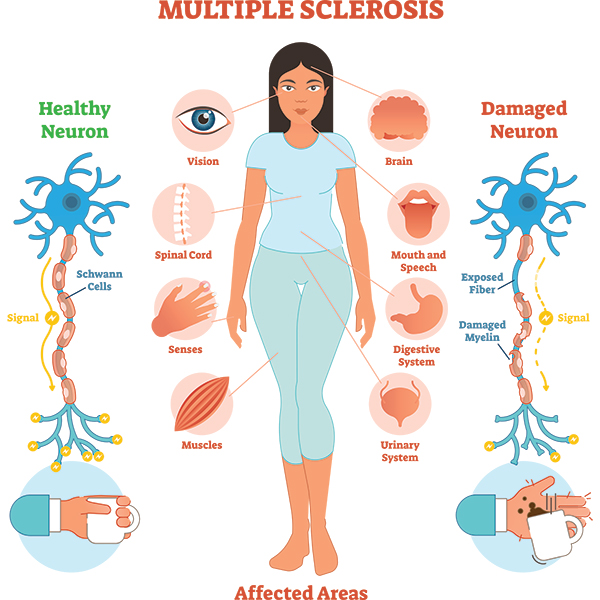
  • The basic functional unit of nervous tissue is the neuron.
    • A neuron is made up of a nerve cell body plus small branches called fibres. One type of fibre, the dendrite, carries nerve impulses to the nerve cell body.
    • A single fibre, the axon, carries impulses away from the nerve cell body.
    • Some axons are covered with a fatty material called myelin that insulates and protects the fibre.
    • Myelinated axons are called white fibres (because of the colour of myelin) and are found in the white matter of the brain and spinal cord.
  • In MS the immune system attacks and damages myelin, oligodendrocytes (myelin producing cells) and axons.
  • This in turn interferes with conduction of impulses along the nerve fibre, resulting in a range of disabling neurological symptoms that vary from one person to another depending on where the damage has occurred.
  • There is no cure and symptoms can ‘come and go’ (relapse) and vary with each individual.
  • The CNS can restore function by remyelinating the axons.
    • After remyelination, function is restored but may not be as quick or as efficient.
    • Permanent loss of function in MS is caused by failure to remyelinate, which in turn leads to axonal loss and neuronal death.

Types of multiple sclerosis

Four disease courses have been identified in MS.

Lublin F, Reingold S, Cohen J et al. Defining the clinical course of multiple sclerosis: the 2013 revisions. Neurology 2014;83:278–286.

Relapsing-remitting MS (RRMS)

  • Characterised by clearly-defined periods of worsening neurological function (relapse), which are followed by periods of partial or complete recovery (remission) without apparent disease progression.
  • Around 85% of patients with MS have RRMS at the time of diagnosis.

Secondary-progressive MS (SPMS)

  • Occurs in around 60–70% of patients with RRMS, typically 10–30 years after initial onset.
  • SPMS is characterised by gradual disease progression with or without relapses.

Primary-progressive MS (PPMS)

  • Characterised by steady disease progression and worsening neurological function from onset, with no distinct periods of relapse or remission.
  • Around 10% of MS patients have PPMS.

Progressive-relapsing MS (PRMS)

  • Characterised by steadily worsening neurological function from the onset with occasional relapses.
  • Around 5% of people with MS have PRMS.

The Pharmaceutical Journal, PJ, 21 February 2015, Vol 294,

No 7850;294(7850):DOI:10.1211/

PJ.2015.20067861


Diagnosis tests

Diagnosis of this condition is very complex and difficult and can be confused with: Guillain-Barre syndrome (medical emergency), Diabetic nerve disorders, viral encephalitis (medical emergency), lupus, migraine and/or Fibromyalgia
  • Brain and/or Spinal cord MRI.
  • Please ask a healthcare professional to explain the following article.

Cause

  • Unknown
  • Maybe:
    • An anti-immune disease where body’s immune system attacks itself in this case the nerves between your brain and rest of the body.
  • Virus:
  • Small intestinal bacteria overgrowth (intestinal infection)
  • Family history
  • High salt diet
  • Obesity
  • Smoking
  • Stress
  • Low quality sleep and lack of sleep in teenagers to adulthood
  • Hormonal (females have it more than males)
    • Pregnancy
    • The period immediately after childbirth

Medication

  •  Anti–TNF-alpha drugs (used in rheumatoid arthritis)

Vitamins, herbals and minerals

Symptoms

(symptoms can vary)

  • General discomfort (muscle weakness), uneasiness or ill feeling (malaise) and/or fatigue (tiredness)?
  • Balance and dizziness problems?
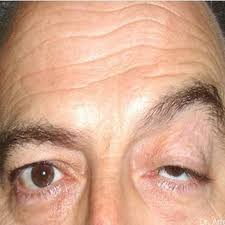
  • Eye(s)/eyelid muscles drooping causing blurred or double vision any visual problems, colour blindness, double vision, vision loss, difficulty focusing, and/or pain behind eye (One or both eyes can be affected)?
  • Aching, painful muscles, muscle cramps/spasms/stiffness?
  • Rash?
  • Any extreme sensitive skin or burning sensation?
  • Shaking and/or trembling and/or tremors?
  • Difficult to concentrate and/or difficulty in concentrating and/or memory problems?
  • Emotional (laugh or cry for no reason)?
  • Irritated, depressed, anxiety and/or panic attacks?
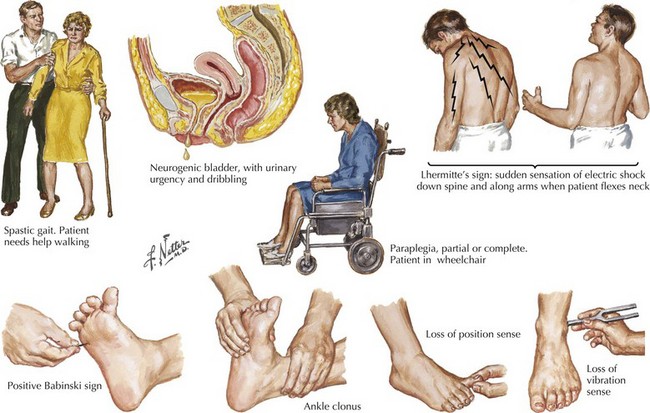
  • Overactive (urgency to go to toilet) or under-active bladder?
  • Increase thirst, heavy sweating and need to urinate frequently?
  • Re-occurring burning and/or pain when urinating?
  • Re-occurring thrush symptoms including discharge?
  • Find passing stools difficult and constipated?
  • Loss interest of sex and/or low sex drive?

Female only:

  • Experience dryness and itchiness in vagina and/or making sexual intercourse painful?

Male only:

Complications /Information to beware of/General tips:

Do not wait, phone for ambulance if have or develop:


This condition can lead to:

This condition can lead to rare symptoms of:

  • Breathing difficulty and/or shortness of breath
  • Constant hiccups
  • Hearing loss
  • Pain and difficulty in swallowing problems
  • Pain in the tongue, throat, ear, or tonsils
  • Skin itching
  • Trigeminal neuralgia
  • Uncontrollable laughing or crying that’s not related to feelings (for no reason)

Eyes:

  • Marcus Gunn pupil is the most frequent ocular manifestation of multiple sclerosis; each eye reacts differently to light exposure.

Medscape


This condition may show similar symptoms to:

Please talk to your healthcare professional (i.e. Medical Doctor/Pharmacist) for further advice

Detailed Information

Please copy and paste any key words from the title: Multiple Sclerosis (MS) in the following respective 'Medtick References and/or Sources' to find out more about the disease (this also may include diagnosis tests and generic medical treatments).

  • Medical News Today

    Medical news and health news headlines posted throughout the day, every day.

  • Medscape (Professional level)

    Latest medical news and expert commentary in your specialty as well as disease information.

  • Healthline

    Medical Information and health advice you can trust

  • EveryDay Health

    Wellness inspired. Wellness enabled.

  • Pharmaceutical Journal (Professional level)

    The Pharmaceutical Journal covers analysis, features, opinion, learning and careers articles, providing insight and knowledge about drugs, pharmacy practice, medicines use and healthcare policy in the context of the pharmacy profession and pharmaceutical science.

  • NHS

    Find information and advice on health conditions, symptoms, healthy living, medicines and how to get help (British National Health Service).

  • WebMD

    Better Information. Better Health.

  • Cleveland Clinic

    Pushing the Standards of care.

  • Mayo Clinic

    No.1 Hospital in the Nation (America)

  • Drugs.com

    Know more. Be sure.

  • National Organisation of Rare Diseases

    NORD is dedicated to supporting education, elevating care, advancing research, and driving policy for rare diseases.

  • Verywell Health

    Know more. Fell better.

  • Nathnac

    Travel health guidance for health professionals advising travellers and for travellers going overseas from the UK.

  • DR Axe

    Health and fitness news. Recipes, Natural Remedies

  • Better health - NHS

    Healthy changes start with little changes. Whether you want to lose weight, drink less alcohol, get active or quit smoking, you have access to lots of free tools and support through Better Health. You can also find simple ways to lift your mood with Every Mind Matters.

    There has never been a better time to kickstart your health. Let’s do this!