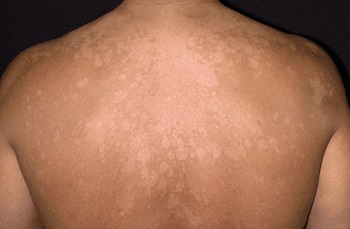
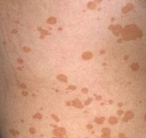
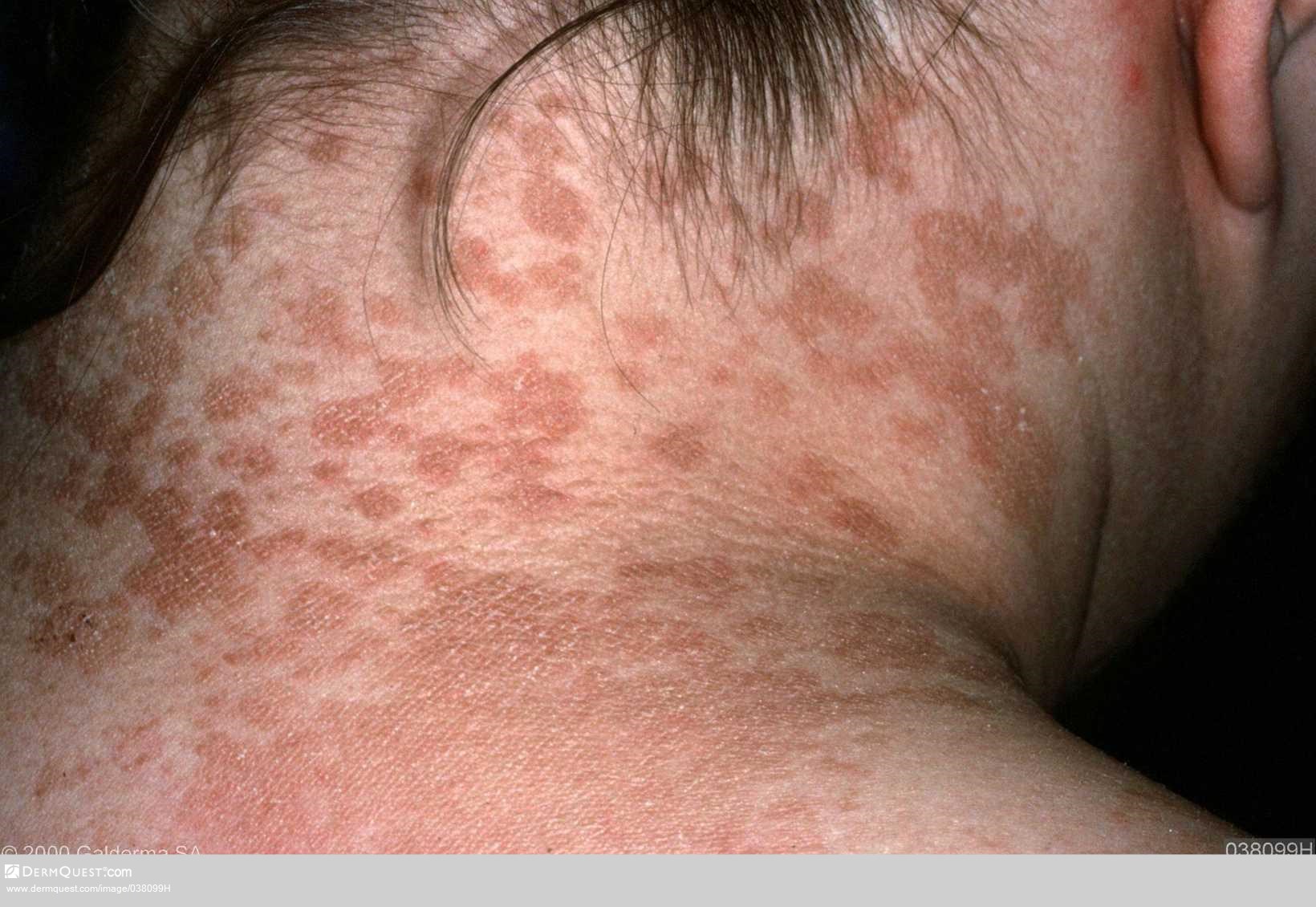
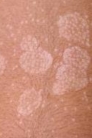
A common unpleasant looking fungal skin condition that cause small patches of skin to become discoloured and scaly.
Patches
The patches may look lighter or darker than your normal skin colour with no particular shape. Even after treatment skin colour can take up to 6 months to back to it natural colour. Lighter patches takes longer than dark patches to recover. It is a natural skin layering/turnover process. One should have a recurrent check ups to make sure fungal condition has not returned.
They develop slowly and may form larger patches.
It occurs when natural fungus in your skin grows rapidly due to its environment.
This fungal condition turns ‘off’ melanin in our skin (melanin is the responsible for ones skin colour and helps us to tan in the sun), hence this condition is more visible in tanned skin because fungal skin will not change colour.
Contagious
It is not considered contagious as one all have natural fungus in our skin. Antibiotics will not help as antibiotics may kill the good bacteria that keep skin fungal condition in balance causing an overgrowth of this fungus causing this condition, however one can use mild antiseptics and anti bacterial products to help with skin hygiene.
Diagnosis Tests
Visual checking (experienced medical professional)
New rash that has appeared or existing rash appears like patches getting worst spreading on neck, upper arms chest, back, tummy, abdomen and thighs (skin appear pink or can appear dark brown, black)?
Patches are from 1cm – 3cm?
Patches join up to larger patches?
Outer skin is scaly and flaky?
Complications /Information to beware of/General tips:
Prevention of bacterial and fungal skin complications
Avoid tight clothing, especially during exercise.
Wash athletic clothing after each use.
Shaving:
Pre-shave, hydrate the hair to soften. This can be done with a warm, damp towel (like how your skin is prepped for shave in the barbershop). At home, it’s more practical to shave immediately after showering. This allows the skin and hair to be well hydrated and softened. Shaving hair that is well-hydrated is more likely to produce a blunt tip, rather than a sharp end.5
Use moisturizing shaving cream or gels to give a shave with less drag. Friction can irritate the skin.
Don’t pull the skin taut when shaving. This gives you a closer shave, but a close shave isn’t what you’re going for. When the skin is pulled taut, the hair is cut so close that it stretches and then retracts under the skin’s surface. This makes ingrown hairs much more likely as the hair grows out.
Use a single blade razor rather than one with multiple blades. Along the same lines, with a multiple blade razor, one blade pulls and stretches the hair while the other blade cuts the hair short enough to retract below the skin’s surface. You may also get good results switching to an electric razor rather than a blade.
Shave in the direction of hair growth rather than against the grain. Doing this won’t give you as close of a shave, so you won’t feel completely smooth. But again that is the goal—to keep the hair just above the surface of the skin so there is less chance of it turning and growing into the skin’s tissue.
Shave less frequently, if possible. Again, this allows the hair to stay a bit on the longer side, reducing ingrown hair development.
Use clippers instead of a razor. This doesn’t give you a close, clean shave, but rather keeps hair very short but above the skin’s surface. It’s recommended that you leave the hair at least 1 millimeter long.
Verywellhealth
Avoid shaving irritated skin.
Use an electric razor or a new disposable razor each time you shave.
Consider other methods of hair removal
Treat mild folliculitis
Use an antibacterial soap.
Apply hot, moist compresses to the affected area.
Consider taking oral allergy medication i.e. antihistamines
Wash towels, washcloths, and bed linens often.
Wear loose-fitting clothes.
Skinsight
Patients can self-manage with the use of topical antiseptics, such as chlorhexidine, povidone-iodine or triclosan, which can be used for seven to ten days.
Please talk to your healthcare professional (i.e. Medical Doctor/Pharmacist) for further advice
Detailed Information
Please copy and paste any key words from the title: Pityriasis (Tinea) Versicolor in the following respective 'Medtick References and/or Sources' to find out more about the disease (this also may include diagnosis tests and generic medical treatments).
The Pharmaceutical Journal covers analysis, features, opinion, learning and careers articles, providing insight and knowledge about drugs, pharmacy practice, medicines use and healthcare policy in the context of the pharmacy profession and pharmaceutical science.
Healthy changes start with little changes. Whether you want to lose weight, drink less alcohol, get active or quit smoking, you have access to lots of free tools and support through Better Health. You can also find simple ways to lift your mood with Every Mind Matters.
There has never been a better time to kickstart your health. Let’s do this!