An infectious viral condition that can spread very quickly via infected mosquitoes.
The time taken to develop symptoms is four to ten days after being bitten and recovery period varies from two days to seven days normally, sometimes it can be a few weeks to many.
It can lead to the fatal condition dengue haemorrhagic fever and dengue shock syndrome (warning signs usually begin in the 24–48 hours after the fever has gone away).
When a person contracts the dengue virus, they develop long-term immunity to that specific serotype but only short-term protection against the others.
They therefore remain susceptible to the other three dengue serotypes and other flaviviruses. Becoming infected with one of the DENV serotypes after having been previously infected with a different one can actually increase the chances of severe disease by a process known as antibody-dependent disease enhancement.
Severe dengue is believed to be more prevalent among children, adolescents, and pregnant women.
Additionally, an increased risk of severe disease has been reported in older adults and individuals with comorbidities such as asthma, diabetes, chronic renal failure, obesity, hypertension, bleeding disorders, and those taking anticoagulant medications.
NS1 antigen test (best during the first 1–7 days of illness)
RT-PCR for dengue virus detection
Plaque Reduction Neutralization Test (PRNT)
IgM antibody test (usually positive after about 4–5 days)
IgG antibody test (helps identify past infection)
Complete blood count (CBC): often shows low platelets and low white blood cells.
Transmission
This condition can spread to others via mosquitos bite, the virus can be present in the blood. If a mosquito bites the infected person during the first seven days of illness, it can become infected and transmit the virus to others (when one has symptoms of the disease in the first seven days after fever starts), it is essential to those with the disease to protect themselves from mosquito bites and prevent transmission to others.
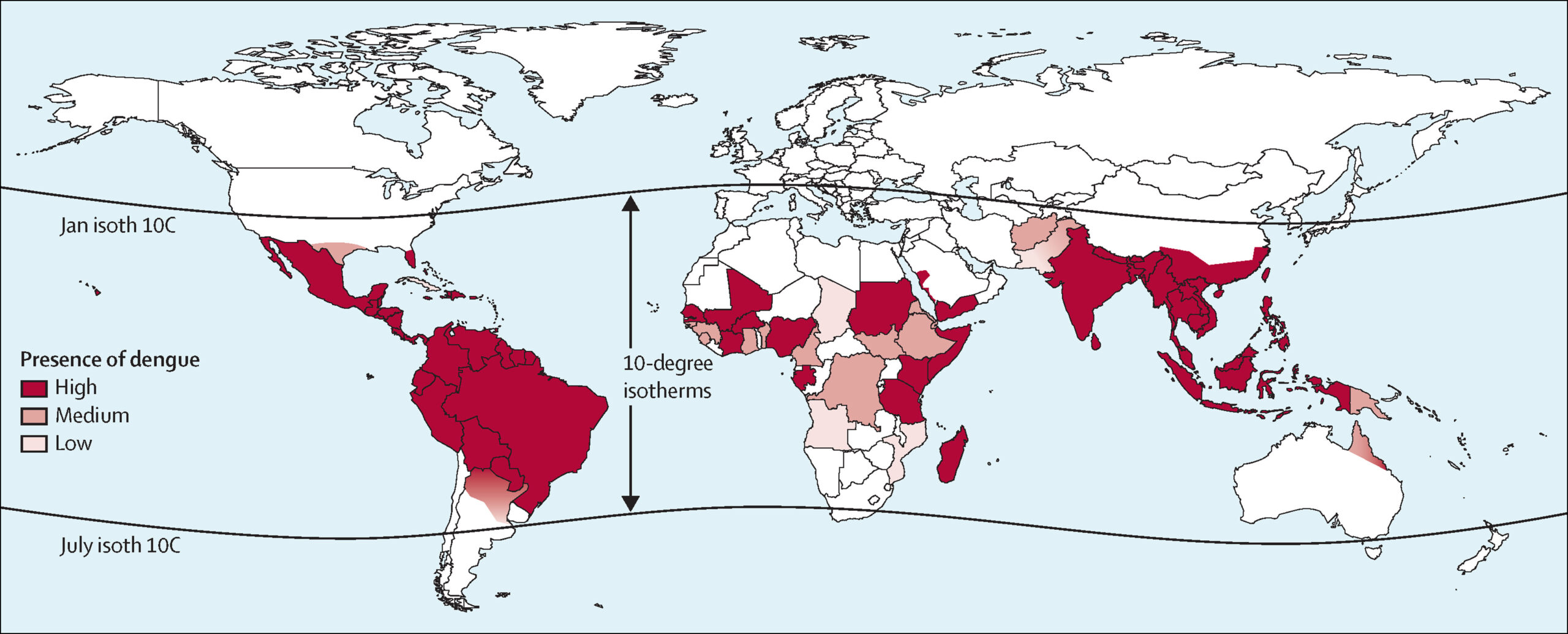
Outbreaks occur particularly during rainy season where there is fresh standing water and puddles and in high dense populated areas surrounded in this environment:
Africa
Caribbean
Hawaii
Indian Subcontinent
Mexico
Malaysian regions
Pacific islands
South and Central America
South East Asia
Countries affected are:
Caribbean
Anguilla
Antigua and Barbuda
Aruba
Bahamas
Barbados
Bonaire
British Virgin Islands
Cayman Islands
Cuba
Curaçao
Dominica
Dominican Republic
Grenada
Guadeloupe
Haiti
Jamaica
Martinique
Montserrat
Puerto Rico
Saba
Saint Barthelemy (French Territorial Collectivity)
Saint Kitts and Nevis
Saint Lucia
Saint Martin (French Territorial Collectivity)
Sint Eustatius
Sint Maarten
Trinidad and Tobago
Turks and Caicos
US Virgin Islands
North America
Bermuda
Mexico
United States of America (Alaska, Hawaii, Oahu, Maui)
Ibuprofen cannot be used in dengue because of side effects such as gastritis, increased risk of bleeding , blood thinning properties, thrombocytopenia [condition that occurs when the platelet count in your blood is too low, (platelets help with healing process) ] and dengue fever bleeding complications. Paracetamol can be given in dengue only under medical supervision because of risk of paracetamol/acetaminophen associated hepatatoxicity.
Cause
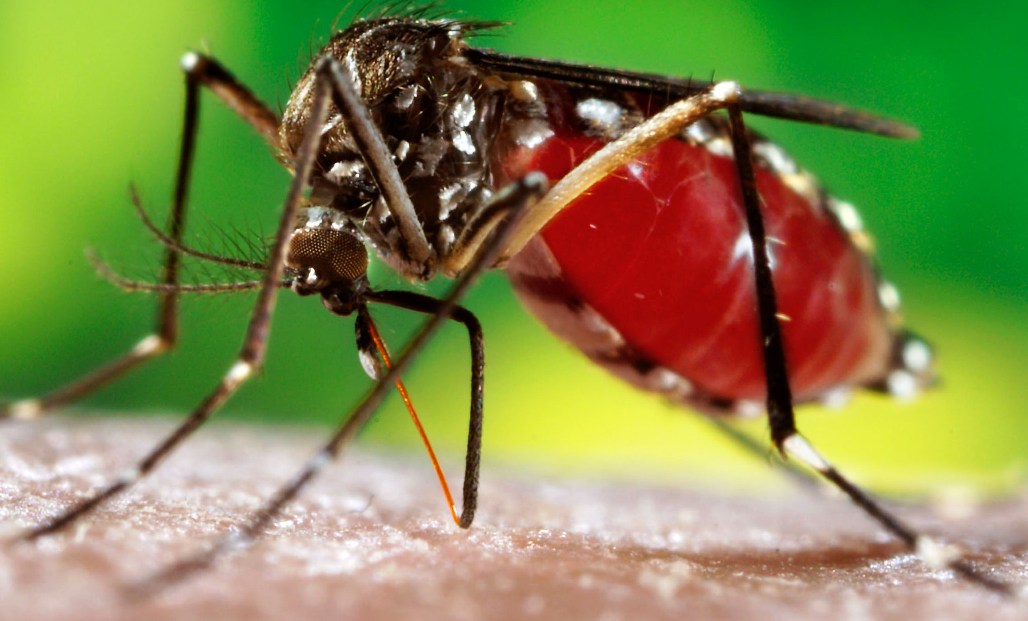
Bite of a type of the infected female mosquito (Aedes aegypti) which belongs to the Flaviviridae family (similar to encephalitis and/or Zika virus and/or Yellow fever causing mosquitoes) during the day especially during hours of dawn and dusk.
Virus:
Dengue virus or Flavirideae flavivirus (DENV-1, DENV-2, DENV-3, or DENV-4 virus)
All have the potential to cause dengue or dengue haemorrhagic fever (DHF), which is a severe form of dengue, however DENV-2 is the most common serotype associated with the occurrence of the most severe forms of the disease.
DENV is transmitted to humans through the bite of infected female mosquitoes, predominantly the Aedes aegypti mosquito, however other Aedes genus species such as Aedesalbopictus can also function as vectors. In some areas of Asia and Africa the transmission cycle can also involve jungle primates which acts as a reservoir for the virus.
Mosquitoes of Aedes aegypti and Aedes albopictus variety are often interconnected with people and their houses, resting inside in cool, dark rooms and breeding in water containers (such as rainwater buckets, cisterns, toilets and tyres). In forested regions, they can be found in water-filled tree holes.
Whilst the Aesdes aegypti mosquito is generally most active during the daytime, feeding between dawn to dusk, they can also potentially bite at night time in very well lit areas.
Whilst the primary transmission route is between humans and mosquitoes. There is some evidence of maternal transmission from a pregnant mother to their baby. The risk depends on the time of the infection during the pregnancy. Pregnant women with DENV infection, can also lead to complications such as pre-term labour, low birthweight and foetal distress.
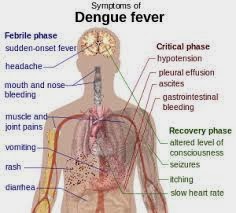
High temperature greater than 38°C (100°F) or over and/or chills and sweats up to five days)?
Severe pain behind the eyes?
Mild bleeding gums?
Facial flushing?
Joint stiffness and pain especially of the knees and shoulders?
Aching, painful muscles, muscle cramps/spasms/stiffness especially lower back, arms and legs?
Headache which is on and off or a constant headache longer than 24 hours?
Flat red skin rash (red spots that run together) appearing two to days after fever starts and then a second rash (looks like measles rash) starts as condition continues starting from the trunk, spreading to limbs and face?
Bruised skin?
Abdominal pain and/or are constant violently vomiting or vomiting longer than two days (one day if a child)?
Complications /Information to beware of/General tips:
Please copy and paste any key words from the title: Dengue (Break Bone Fever) in the following respective 'Medtick References and/or Sources' to find out more about the disease (this also may include diagnosis tests and generic medical treatments).
The Pharmaceutical Journal covers analysis, features, opinion, learning and careers articles, providing insight and knowledge about drugs, pharmacy practice, medicines use and healthcare policy in the context of the pharmacy profession and pharmaceutical science.
Healthy changes start with little changes. Whether you want to lose weight, drink less alcohol, get active or quit smoking, you have access to lots of free tools and support through Better Health. You can also find simple ways to lift your mood with Every Mind Matters.
There has never been a better time to kickstart your health. Let’s do this!