What is it?
A viral infection that causes ‘food poisoning like’ symptoms which is highly contagious. It is known as the ‘winter vomiting bug’.
- Noroviruses are highly contagious, with infection requiring fewer than 10 virions.
- The virus is extremely stable in the environment and resists freezing temperatures, heat (up to 140°F [60°C]), acidic conditions, vinegar, alcohol, antiseptic hand solutions, high sugar concentrations, and disinfecting with chlorine.
- The incubation period (when one caught the infection and then present symptoms) for norovirus is approximately 1-2 days (average period, is approximately 33 hours).
- Symptoms typically last 1-3 days (or longer in immunocompromised individuals).
- Viral shedding continues after resolution of norovirus symptoms, often lasting 7-10 days.
- Estimates suggest that approximately 30% of norovirus cases are asymptomatic (no symptoms present)
Medscape
Diarrhoea symptoms can last from 3- 8 days (it is advised to see your Medical Doctor/pharmacist and not to wait). An infected person should stay away from work or school at least 48 hours after last attack of vomiting or diarrhoea.
Check with your Medical doctor/Pharmacist when one can have any type of fever reducing medication to make sure it suitable for you.
These pain and fever reducing medications will help with muscle aches and pain and not with the diarrhoea condition itself.
Diagnosis tests
To rule out Bacterial Gastroentritis:
- Blood tests – check for infection and other medical conditions especially if fever present.
- Stool culture – detect bacteria/protozoa/worms
- Stool PCR tests – detect bacteria/protozoa/worms quickly
- Stool microscopy
Cause
- Virus:
- Adenovirus
- Astrovirus
- Norovirus
- Rotavirus
- In contact with infected person
- Spread via faeces and then orally
- Poor hygiene i.e.
- Contaminated food and objects i.e.
- Spread via a droplet route from vomit (rare)
Symptoms
- High temperature greater than 38°C (100°F) or over and/or chills and sweats longer than 72 hours?
- Abdominal pain and/or are constant violently vomiting (vomited three times or more per 24 hours/day) or vomiting longer than two days (one day if a child):
- 3 months – 11 years old longer than 24 hours?
- 12 years old + longer than 48 hours?
- Watery diarrhoea (six or more loose (diarrhoea) stools per 24 hours /day):
- 3 – 12 months old longer than 24 hours?
- 1 – 7 years old longer than 48 hours?
- 8 years old+ longer than 72 hours?
- Loss of appetite?
- General discomfort (muscle weakness), uneasiness or ill feeling (malaise) and/or fatigue (tiredness)?
- Dehydrated?
- Feel full quickly when eating trapped wind and burping (‘foul rotten egg smell’)?
- Bloody stools or rectal bleeding?
Complications /Information to beware of/General tips:
Medical Emergency Condition
And/or do not wait, phone for an ambulance if have or develop:
This condition can lead to:
- Postinfectious IBS (PI-IBS) – this can lead to Irritable bowel syndrome symptoms and then this condition can lead to further food poisoning episodes.
Medscape
Further Advice
- If one has this condition phone the medical doctor practice rather than visiting the practice as one may spread it to others.
- An infected person should stay away from work or school at least 48 hours after last attack of vomiting or diarrhoea.
- Symptoms of vomiting should stop within 24 hours (if not seek medical advice).
- Diarrhoea can last from 1- 10 days (Medtick recommend you contact your medical doctor/pharmacist as in the symptom section).
- Fever, stomach pain, headache will usually clear from 1- 3 days (Medtick recommend you contact your medical doctor/pharmacist as in the symptom section).
- Ethanol-based hand sanitizers (60%-95%) are preferred to other alcohol- or non–alcohol-based hand sanitizer products during outbreaks of norovirus.
- Do not touch your face with unwashed hands
- Avoid close contact with infected people
- Avoid close contact with people who are already ill
- Do not share towels and utensils, dishes, drinking glasses
- Clean and disinfect frequently touched objects and surfaces
- After an illness, clean surfaces that may have the virus on them with detergent and chlorine bleach.
- Don’t prepare any food for other people until at least 2 or 3 days after diarrhoea/vomiting stops.
- Don’t eat food that is prepared by someone who is ill with diarrhoea/vomiting.
- Stay home and away from other people when ill.
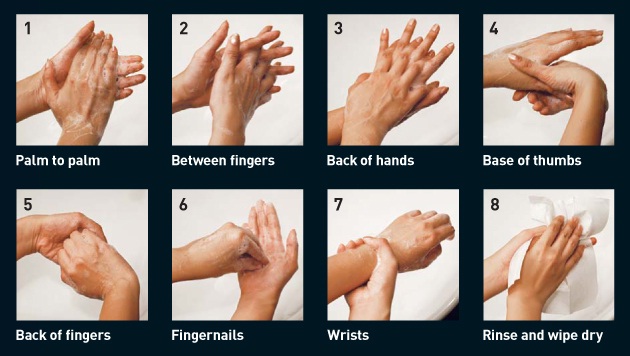
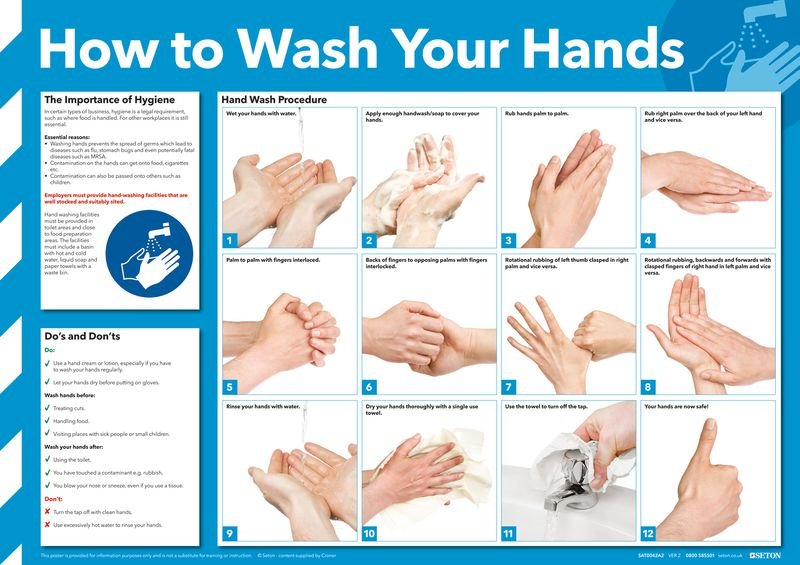
- How to wash Hands
- Diarrhoea advice
Future advise especially when travelling to an infectious country:
- Fresh foods: those that are peeled or cooked are the safest
- Avoid high risk foods like shellfish
- Boiling water is the best method of sterilisation
- Chemicals are useful for preparing safe drinking water but have their limitations
- Chlorine-based tablets are widely available and will be appropriate for most travellers
- More intrepid travellers and those planning to use surface waters as a drinking water source should use an iodine-based product.
| Panel 1: Choice of foods for the traveller |
| Usually safe |
Risky |
Best avoided |
| Freshly prepared and hot, cooked food including meat and consume quickly.
(Chicken breast should always be cooked until the internal temperature reaches 165°F, as measured with a meat thermometer. This typically corresponds to a cooking temperature of 375°F for 20-25 minutes. Cooking at temperatures below 325°F is not recommended, as bacteria can survive longer at lower temperatures).
Boiled dairy i.e. milk and/or Indian chai. |
Food from street vendors unless fresh and hot |
Poorly stored food
Cold foods left standing especially sauces
Avoid buffets (hot or cold) left standing along time |
| Peeled fruit |
Unpeeled fruit and salad unless well washed in clean water |
Broad leafed salad i.e. lettuce due to large surface area packed with organisms- harder to wash off all |
| Canned food
Dried food (bread, rice and pasta) and freshly baked bread |
Ice cream |
Shellfish
Rare meat and fish
Unpasteurised dairy products
Ice containing drinks |
- Iodine or chlorine used for water purification (as discussed later) can also be used for soaking and manufacturers of food products give recommendations for the appropriate concentrations.
There are three methods by which the traveller can prepare clean drinking water:
- Boiling:
- Boil water for a full five minutes at any altitude.
- Chemical disinfection:
- Iodine, chlorine, katedyne silver.
- Filtration
The Pharmaceutical Journal, PJ, January 2000;():DOI:10.1211/PJ.2000.20000218
This condition may show similar symptoms to:
Please talk to your healthcare professional (i.e. Medical Doctor/Pharmacist) for further advice
Detailed Information
Please copy and paste any key words from the title: Viral Gastroenteritis (Norovirus) in the following respective 'Medtick References and/or Sources' to find out more about the disease (this also may include diagnosis tests and generic medical treatments).
- Medical News Today
Medical news and health news headlines posted throughout the day, every day.
- Medscape (Professional level)
Latest medical news and expert commentary in your specialty as well as disease information.
- Healthline
Medical Information and health advice you can trust
- EveryDay Health
Wellness inspired. Wellness enabled.
- Pharmaceutical Journal (Professional level)
The Pharmaceutical Journal covers analysis, features, opinion, learning and careers articles, providing insight and knowledge about drugs, pharmacy practice, medicines use and healthcare policy in the context of the pharmacy profession and pharmaceutical science.
- NHS
Find information and advice on health conditions, symptoms, healthy living, medicines and how to get help (British National Health Service).
- WebMD
Better Information. Better Health.
- Cleveland Clinic
Pushing the Standards of care.
- Mayo Clinic
No.1 Hospital in the Nation (America)
- Drugs.com
Know more. Be sure.
- National Organisation of Rare Diseases
NORD is dedicated to supporting education, elevating care, advancing research, and driving policy for rare diseases.
- Verywell Health
Know more. Fell better.
- Nathnac
Travel health guidance for health professionals advising travellers and for travellers going overseas from the UK.
- DR Axe
Health and fitness news. Recipes, Natural Remedies
- Better health - NHS
Healthy changes start with little changes. Whether you want to lose weight, drink less alcohol, get active or quit smoking, you have access to lots of free tools and support through Better Health. You can also find simple ways to lift your mood with Every Mind Matters.
There has never been a better time to kickstart your health. Let’s do this!