Pulmonary oedema is a serious medical condition that happens:
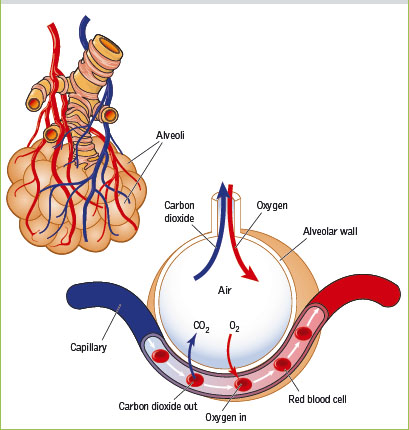
When excess fluid begins to fill the lungs’ air sacs (the alveoli- where gas exchange takes place, it is here where next to the alveoli are blood capillaries, these capillaries carry oxygen we breath from the air into our blood and take carbon dioxide away from the capillaries into our lungs and is breathed out).
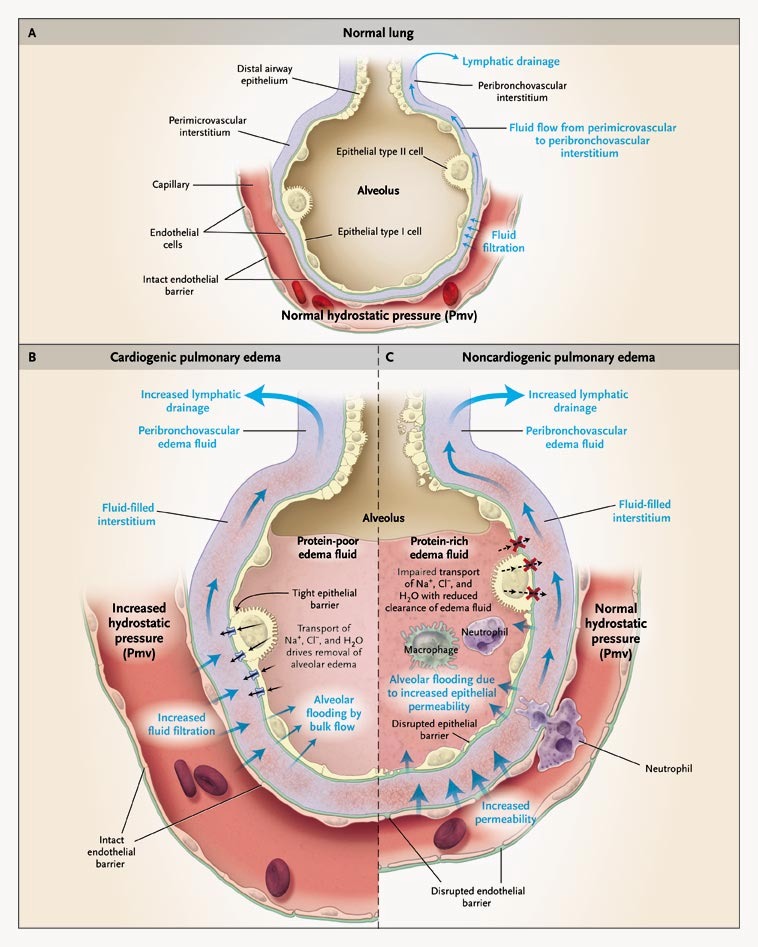
When the alveoli are filled with fluid, they cannot adequately add oxygen to the blood via capillaries (then to the heart and rest of the body) or remove carbon dioxide from the blood via capillaries (leaving too much carbon dioxide in the blood).
This condition can also be referred as Lung congestion, Lung water, and/or Pulmonary congestion.
Diagnosis Tests
A health care professional will perform a basic physical examination and listen to your lungs with a stethoscope he/she will look out for:
An increased heart rate
Rapid breathing
Crackling sound from your lungs
Any abnormal heart sounds
Others:
Chest radiography
Detect enlarged central pulmonary arteries that taper distally (peripheral pruning).
Kerley B lines might be present and are signs of left heart disease.
Patients with pulmonary hypertension typically show attenuation or narrowing of peripheral vessels because of diminished distal perfusion.
Enlargement of the right atrium and right ventricle is a common feature of advanced pulmonary hypertension (not always seen).
To treat this condition, all underlying causes must be examined and treated and hopefully this will reduce the pressure and fluid in the lungs, otherwise an oxygen ventilator may be considered to pump more oxygen into one’s lungs.
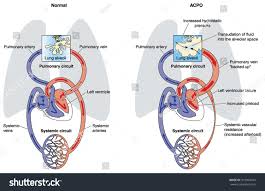
Heart failure -(the left side of the heart cannot pump blood around the body effectively and this causes the blood pressure to be applied back to the lungs, the blood vessels in the capillaries leak into the alveoli (where gas exchange takes place of oxygen and carbon dioxide) making that process less effective and thus causing symptoms.
Also this pressure causes too much blood (artery) pressure in the lungs and this then can affect the right hand side of the heart, because the right hand side of the heart needs to pump blood to the lungs to remove carbon dioxide. If the heart is pumping against a resistance (in this case high lung blood pressure), the heart has to work harder and this can damage the pump and muscles on the left hand side of the heart.
Non- heart conditions
(the cause is the same , fluid leaks from the blood capillaries into the alveoli)
For this condition an oxygen ventilator maybe used to provide more oxygen to ones lungs. Complications include:
Pulmonary embolism– blood clots can form (in the vessels of your arms and/or legs) especially when on a ventilator and one is doing no form of exercise. The blood clot can break off and travel to the lungs.
Collapsed lung (pneumothorax)-A breathing machine called a ventilator is used to increase oxygen in the body and force fluid out of the lungs. however, the pressure and air volume of the ventilator can force gas to go through a small hole in the very outside of a lung and cause that lung to collapse.
Infections –Because the ventilator is attached directly to a tube inserted in your windpipe, this makes it much easier for germs to infect and further injure your lungs.
Please talk to your healthcare professional (i.e. Medical Doctor/Pharmacist) for further advice
Detailed Information
Please copy and paste any key words from the title: Pulmonary Oedema (Pulmonary hypertension) in the following respective 'Medtick References and/or Sources' to find out more about the disease (this also may include diagnosis tests and generic medical treatments).
The Pharmaceutical Journal covers analysis, features, opinion, learning and careers articles, providing insight and knowledge about drugs, pharmacy practice, medicines use and healthcare policy in the context of the pharmacy profession and pharmaceutical science.
Healthy changes start with little changes. Whether you want to lose weight, drink less alcohol, get active or quit smoking, you have access to lots of free tools and support through Better Health. You can also find simple ways to lift your mood with Every Mind Matters.
There has never been a better time to kickstart your health. Let’s do this!