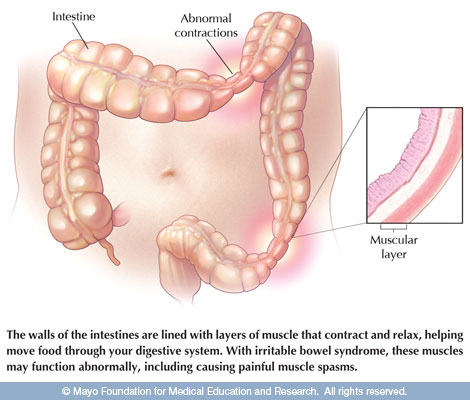
According to the Rome IV diagnostic criteria for IBS, a patient should have recurrent abdominal pain on average at least 1 day per week over the past 3 months that is associated with these criteria:
- A change in the frequency of stool
- A change in the form (appearance) of stool
Chang L. Updates to the Rome Criteria for Irritable Bowel Syndrome. Gastroenterol Hepatol (N Y). 2017;13:304-306. Source
- During the normal process of digestion, the smooth muscle that lines the gastrointestinal tract moves in a controlled, rhythm like manner. These waves of movement (peristalsis) move the gut contents along the length of the digestive tract, allowing food to be mixed with digestive enzymes and the required nutrients to be absorbed.
- The entire digestive tract, however, is sensitive and easily disrupted, peristaltic contractions can go out of sync they then can become strong and cause painful cramps this is the case in Irritable Bowel Syndrome (IBS)/Cramps in Stomach.
- It is well recognised that in IBS there is a miscommunication between the gut and the brain (gut-brain axis).
- What this means for people with IBS is that there can be changes to the movement and sensitivity of their gut and changes to the processing in their central nervous system.
Please note:
- Common gut disorder of an unknown cause (research is still ongoing).
- Each episode can vary in symptoms and flare ups can occur.
- Cramps and irritable bowel syndrome (IBS) has been linked to anxiety and stress.
- First cases mainly reported between 30-50 year old.