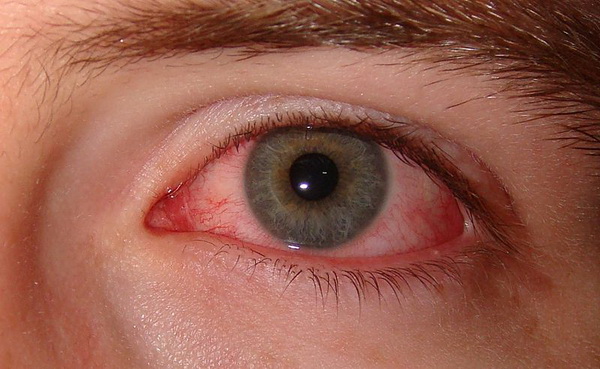
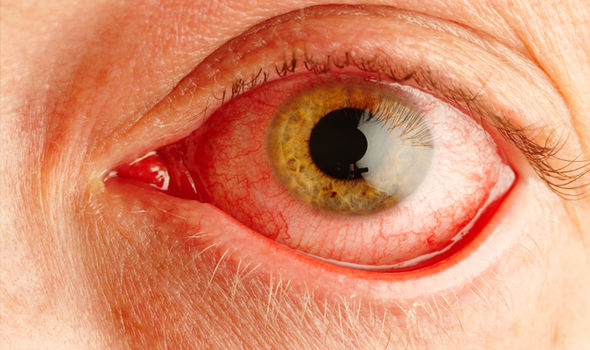
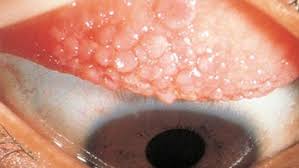
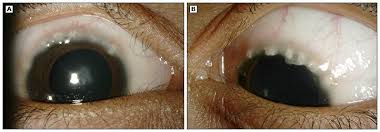
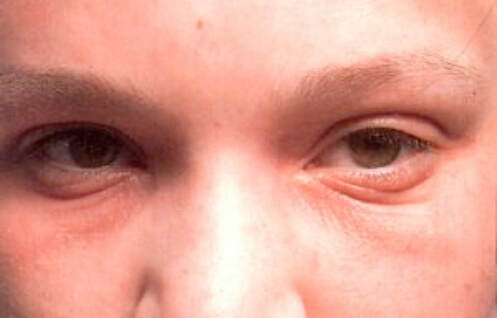
Where one does not produce enough tears (less common) or the quality of tear is a poor allowing it to evaporate quickly causing dry eyes (more common) i.e. proptosis (when one or both of your eyes bulge from their natural position) or a mixture of both i.e. Sjogren syndrome.
As a result one is prone to get bacterial, viral conjunctivitis since the eye can’t remove debris easily.
It can cause watery eyes but these tears do not have the same lubricating quality as normal tears.
In severe cases visual impairment, severe sensitivity to light, red eyes, painful eyes and eye scarring can occur if not treated.
Diagnosis tests
Bacterial culture
Biopsy (rare)
Eyelash sampling (microscopy)
check for mites, bacterial and fungal, viral conditions
Meibomian gland evaluation
Gland expression test (checking oil quality)
Blockage or thickened secretions
Tear film instability tests
Skin evaluation – check for dermatitis conditions
Slit-lamp examination (key eye test)
Tear film tests (dry eye assessment)
Tear osmolarity tests (a fluorescein tear breakup time of < 10 seconds is considered abnormal and might indicate an unstable tear film and/or tear osmolarity between eyes are considered abnormal)
Schirmer I test (measures basic and reflex testing without anesthesia. Less than 5.5 mm of wetting after 5 minutes indicates aqueous tear deficiency)
Ocular Surface Disease Index: Offers three subscales (ocular symptoms, vision-related function, and environmental triggers) and demonstrates good specificity (0.83) and a moderate sensitivity (0.60) in distinguishing between patients with dry eye syndrome and healthy people.
Standard Patient Evaluation of Eye Dryness Questionnaire: Designed to track dry eye syndrome progression. Its validity was determined by comparing how it could classify patients on the basis of their symptoms according to the Ocular Surface Disease Index.
Once one has done these questionnaires, please show to your optometrist
Visits and follow up appointments
Patients should have follow-up visits every 3-6 months are appropriate with their specialists/Medical Doctor, if the condition is in control and one has no progression.
For patients with glaucoma progression, treatment adjustment and monitoring every 1-2 months is recommended.
For those who have rapid progression, do not wait, seek frequent and rapid follow-up.
In contrast, if no progression occurs and the patient has achieved their target intraocular pressure, follow-up visit intervals can be extended to every 6-12 months.
Progressive supranuclear palsy (PCP)- certain parts of the brain are damaged as a result of a build-up of a protein called tau causing muscle and neurological problems
Keratomalacia – [severe vitamin A deficiency with dry, “foamy,” silver-grey deposits (Bitot spots) that may appear on the delicate membranes covering the whites of the eyes]
Meibomian gland dysfunction (condition in which the glands in the eyes become inflamed and do not produce tears as they should)
Corneal abrasion (a scratch on the surface of the eye)
Corneal erosion (thinning of the surface of the eye)
Corneal infection
Scarring of the eyes
Treatments and General tips
If one has allergic conjunctivitis:
Applying a cold compress (five to ten minutes once or twice a day) to the eyes can help reduce swelling and itching.
Options for pharmacological management include topical antihistamine eye drops that also contain a vasoconstrictor agent. One drop two to three times per day can be used in those aged above 12 years old. Improvement should be seen in a few days to a week;
Mast cell stabiliser, sodium cromoglycate 2% one drop four times a day, is an alternative and can be used in children (check individual products for licensing information) for a minimum of two weeks.
If one has dry eyes:
A Low viscosity drops for day time (e.g. hypromellose 0.3%) can be used one drop as required.
If one feels it not helping after a four weeks to six weeks trial then consider: Patients can then move up in viscosity to carmellose 0.5% and carbomer 0.2% for night-time treatment, with white soft paraffin or combinations with mineral oil in ointment form added to support hydration.
Preservative-free formulations are preferred for frequent use.
If still not helping then patient should consider talking to their optician, where an assessment can be made to check it is not due to meibomian gland dysfunction.
Patients with elements of meibomian gland dysfunction may need to switch to sodium hyaluronate or a lipid-based preparation.
Please do not disregard dry eyes as it may lead to corneal damage and or impact quality of life (i.e. sleep, work driving ) leading to anxiety and depression related conditions.
One should have routine eye tests at least every two years but if one has concerns one should book an eye test at any point
Persons over 40 years should have eye test at least every 2 years and you must tell drivers authority if it affects your driving
Exercise your eyes
Focus change
This exercise works by challenging your focus. It should be done from a seated position.
Hold your pointer finger a few inches away from your eye.
Focus on your finger.
Slowly move your finger away from your face, holding your focus.
Look away for a moment, into the distance.
Focus on your outstretched finger and slowly bring it back toward your eye.
Look away and focus on something in the distance.
Repeat three times.
Near and far focus
This is another focus exercise.
As with the previous one, it should be done from a seated position.
Hold your thumb about 10 inches from your face and focus on it for 15 seconds.
Find an object roughly 10 to 20 feet away, and focus on it for 15 seconds.
Return your focus to your thumb.
Repeat five times.
Figure eight
This exercise should be done from a seated position as well.
Pick a point on the floor about 10 feet in front of you and focus on it.
Trace an imaginary figure eight with your eyes.
Keep tracing for 30 seconds, then switch directions.
20-20-20 rule
Eye strain is a real problem for a lot of people. Human eyes are not supposed to be glued to a single object for extended periods of time. If you work at a computer all day, the 20-20-20 rule may help prevent digital eye strain.
To implement this rule, every 20 minutes, look at something 20 feet away for 20 seconds.
Vision therapy
Vision therapy may include eye exercises, but only as part of a more specialised treatment program done under the supervision of an eye doctor, optometrist, or ophthalmologist.
The goal of vision therapy can be to strengthen the eye muscles.
It also can help to retrain poor visual behaviour, or help with eye tracking issues.
Healthline : Medically reviewed by Ann Marie Griff, O.D. — Written by Corinne O’Keefe Osborn — Updated on September 29, 2018
Episcleritis – Inflammation in the episclera of the eye [the episclera is the tissue that lies over the sclera (the white of the eye)- this can caused red, irritated, nodules (spots) watery eyes and at times pain)]
Please talk to your healthcare professional (i.e. Medical Doctor/Pharmacist/Optician) for further advice
Detailed Information
Please copy and paste any key words from the title: Dry Eye Syndrome (Keratoconjunctivitis) in the following respective 'Medtick References and/or Sources' to find out more about the disease (this also may include diagnosis tests and generic medical treatments).
The Pharmaceutical Journal covers analysis, features, opinion, learning and careers articles, providing insight and knowledge about drugs, pharmacy practice, medicines use and healthcare policy in the context of the pharmacy profession and pharmaceutical science.
Healthy changes start with little changes. Whether you want to lose weight, drink less alcohol, get active or quit smoking, you have access to lots of free tools and support through Better Health. You can also find simple ways to lift your mood with Every Mind Matters.
There has never been a better time to kickstart your health. Let’s do this!