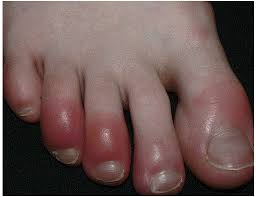
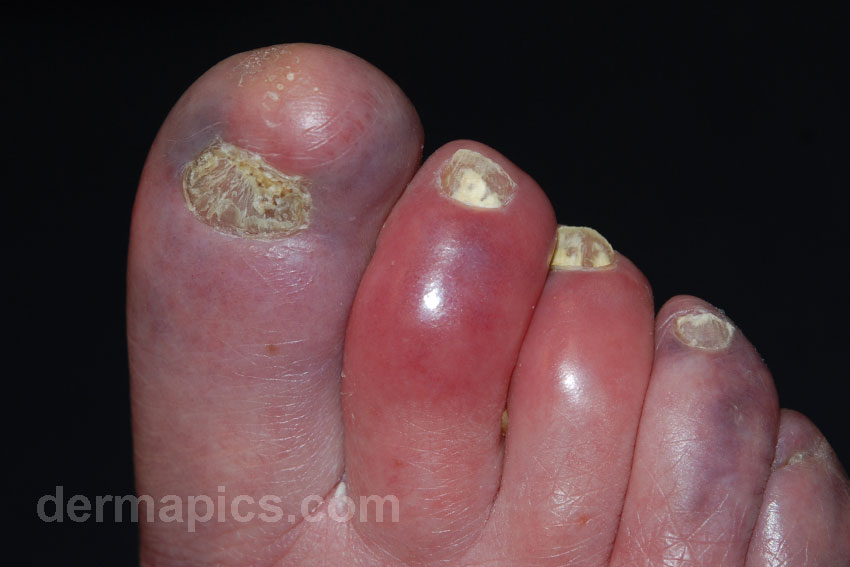
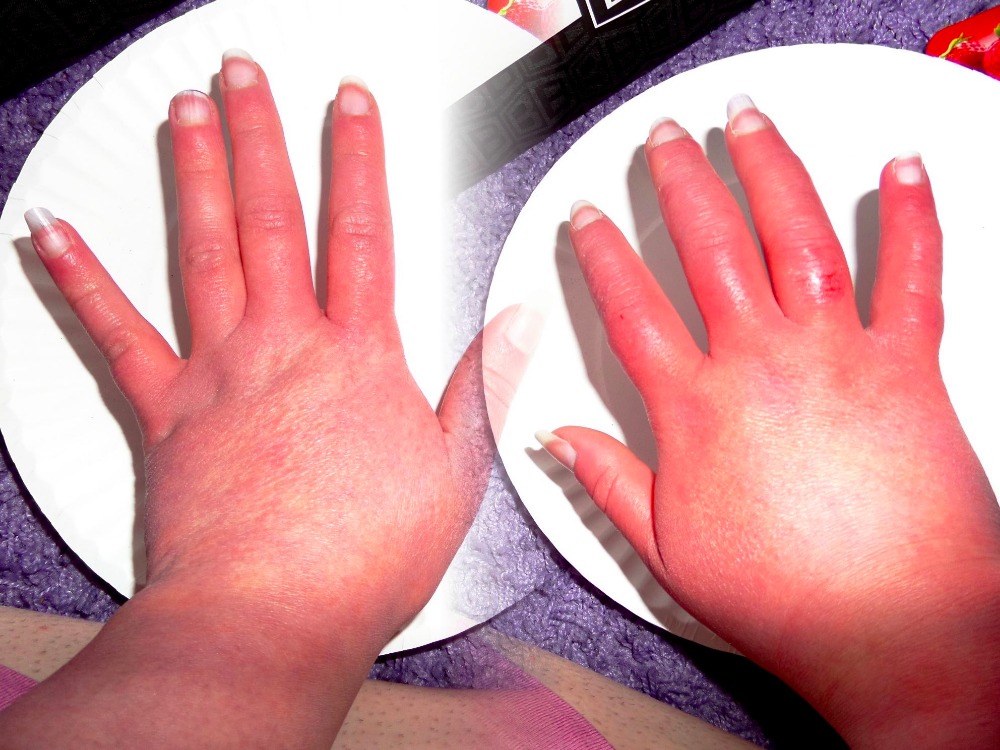
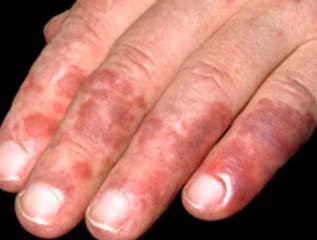
When the skin is cold, blood vessels near its surface get narrower. If the skin is then exposed to heat, the blood vessels become wider.
If this change in blood vessel shape occurs to quickly, blood vessels near the surface of the skin can’t always handle the increased blood flow.
This can cause blood to leak into the surrounding tissue, which may cause the swelling and itchiness.
Primary chilblains (no other disease causing chilblains) are milder than secondary disease (where one has another condition causing chilblains), with complete resolution typically occurring within 3 weeks; however, long term cases have been described with repeated exposure to cold.
Diagnosis tests
Nail-fold capillaroscopy, a relatively simple examination of the nail-fold capillaries under magnification
Other tests to rule out secondary cause of chilblains (see causes)
Cause
Family history of chilblains
Exposure to cold, damp or draughty conditions (winter periods)
Surgery of arteries, veins, capillaries and/or lymphatic vessels
Areas of the feet that are exposed to pressure, such as a bunion or a toe that’s squeezed by tight shoes
Cryoproteins – are serum or plasma proteins that reversibly precipitate (form a gel) at temperatures below 37 degree centigrade and re-dissolve upon warming.
If your skin gets cold, it’s important to warm it up gradually.
Heating the skin too quickly, for example by placing your feet in hot water or near a heater, is one of the main causes of chilblains.
NHS Choices
Maintenance of core body temperature should be emphasized, along with protection of the extremities (fingers and toes), because a threat to core body temperature induces peripheral vasoconstriction despite adequate peripheral insulation.
The use of layered clothing on the trunk and moisture-wicking socks and gloves can be helpful.
One can use anti-histamines (if suitable) and/or calamine lotion (if suitable) to calm the skin down if its it itchy and/or sore.
Avoidance of vasoconstrictive agents, including nicotine, caffeine, and ephedrine-containing substances (i.e. decongestants, diet aids).
There are further medications that can be prescribed by your Medical Doctor after they have conducted a further investigation to rule out any underlying cause.
Cholesterol emboli syndrome (also known as the “blue toe syndrome”) – (net like appearance on the skin when feeling cold and then disappears when warmed up- this may indicate a blocked artery).
Please talk to your healthcare professional (i.e. Medical Doctor/Pharmacist) for further advice
Detailed Information
Please copy and paste any key words from the title: Chilblains in the following respective 'Medtick References and/or Sources' to find out more about the disease (this also may include diagnosis tests and generic medical treatments).
The Pharmaceutical Journal covers analysis, features, opinion, learning and careers articles, providing insight and knowledge about drugs, pharmacy practice, medicines use and healthcare policy in the context of the pharmacy profession and pharmaceutical science.
Healthy changes start with little changes. Whether you want to lose weight, drink less alcohol, get active or quit smoking, you have access to lots of free tools and support through Better Health. You can also find simple ways to lift your mood with Every Mind Matters.
There has never been a better time to kickstart your health. Let’s do this!