A rare and complex recessively inherited disorder of immune-cell dysfunction with multiple autoimmunities.
It occurs when antibodies and immune cells are launched by the body against one or several antigens of its own tissues.
this conditions tends to cluster in certain homogenous populations, including certain groups of Finns, Iranian Jews, and Sardinians.
However, it can be found in numerous populations and among multiple ethnic. groups
Cause
Changes (mutations) in the autoimmune regulator (AIRE) gene.
APS-1 is caused by mutations in the AIRE gene. To date, more than 60 mutations in the AIRE gene have been identified in people with APS-1.
The AIRE gene is responsible for the production of a protein called ‘autoimmune regulator’ which is highly expressed in the thymus gland, and generates thymus derived or T lymphocytes. If there is a deficiency of this protein, then those T-cells which have receptors capable of interacting with self-antigens can escape into the circulation (instead of being destroyed in the thymus and not released) and result in autoimmunities. For reasons that are still unclear, defects of the autoimmune regulator protein seem to mostly affect endocrine (hormone-producing) glands.
HLA-DR/DQ genes also play a role in predisposing to which of the component autoimmune disease the patient actually develops.
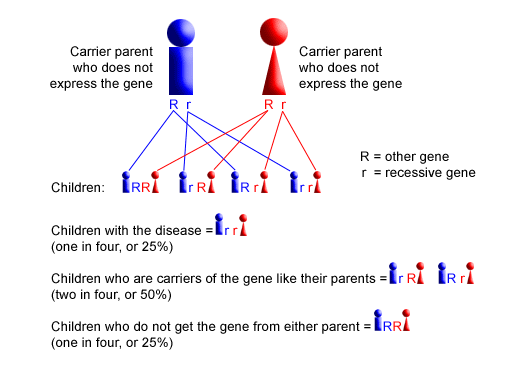
APS-1 is inherited in an autosomal recessive pattern. Recessive genetic disorders occur when an individual inherits an abnormal gene from each parent. If an individual receives one normal gene and one abnormal gene for the disease, the person will be a carrier for the disease, but usually will not show symptoms. The risk for two carrier parents to both pass the abnormal gene and, therefore, have an affected child is 25% with each pregnancy. The risk to have a child who is a carrier, like the parents, is 50% with each pregnancy. The chance for a child to receive normal genes from both parents is 25%. The risk is the same for males and females.
Hypoparathyroidism (lack of parathyroid hormone and/or medical conditions in releasing parathyroid hormone and/or resistance by end organs to accept the parathyroid hormone) approx 75% are affected before the age of 10 years old?
Please talk to your healthcare professional (i.e. Medical Doctor/Pharmacist) for further advice
Detailed Information
Please copy and paste any key words from the title: Autoimmune Polyglandular Syndrome Type 1 in the following respective 'Medtick References and/or Sources' to find out more about the disease (this also may include diagnosis tests and generic medical treatments).
The Pharmaceutical Journal covers analysis, features, opinion, learning and careers articles, providing insight and knowledge about drugs, pharmacy practice, medicines use and healthcare policy in the context of the pharmacy profession and pharmaceutical science.
Healthy changes start with little changes. Whether you want to lose weight, drink less alcohol, get active or quit smoking, you have access to lots of free tools and support through Better Health. You can also find simple ways to lift your mood with Every Mind Matters.
There has never been a better time to kickstart your health. Let’s do this!