Hypocalcaemia (low levels of calcium in the blood)
Defined as a total serum calcium concentration < 8.8 mg/dL (< 2.20 mmol/L) in the presence of normal plasma protein concentrations or as a serum ionized calcium concentration < 4.7 mg/dL (< 1.17 mmol/L).
Reference ranges for serum calcium vary by age and sex
Diagnosis Tests
Test include:
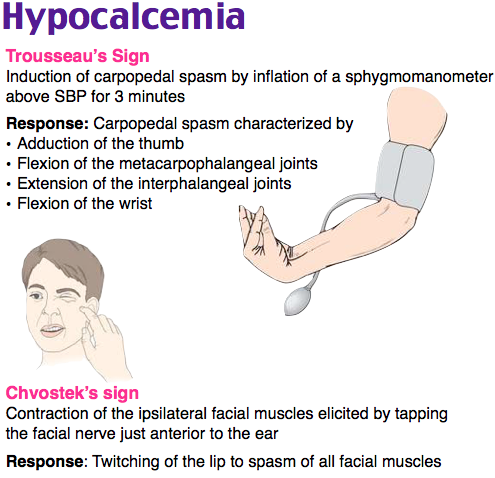
Trousseau sign and chvostek sign to check tetany muscle contraction (not 100% conclusive)
Disorders of the parathyroid hormone gland and related hormones (hypoparathyroidism – where not enough parathyroid hormone gland is produced or Pseudohypoparathyroidism when there is resistance shown by the end -organs to the parathyroid hormone)
Neck irradiation/radioiodine therapy
Postparathyroidectomy in dialysis patients
Inadvertent surgical removal (can be transient or permanent)
Muscle twitching (Twitching one’s eyes and/or nose and/or face and arms and/or legs)?
Jerky movements (irregular movements which aren’t rhythmic or repetitive)?
Numbness and tingling around the mouth?
Jaw pain and/or difficulty chewing, swallowing, talking and/or slurred speech and/or difficulty in opening the mouth and /or difficult to eat?
Constant hiccups?
Pain, numbness, burning and tingling (pins and needles) sensation in one’s hands and fingers (thumb and/or index finger and/or middle finger and/or ring finger and/or small finger)?
Pain and/or numbness and/or tingling sensation in one or both legs and/or foot area?
Brittle, soft weak bones, dental problems and/or prone to fractures or curved/bone legs and/or curved spine and/or arching back?
Bone pain?
Joint pain and stiffness?
Lifeless hair and/or coarse hair?
Balance and dizziness?
Voice changes and/or a hoarse voice and/or a deep voice (due to laryngospasm)?
Short of breath and/or breathing difficulties (whether after exercise or not) and/or wheezing?
General discomfort (muscle weakness), uneasiness or ill feeling (malaise) and/or fatigue (tiredness)?
Involuntary muscle movements, involuntary twitching or writing
Memory loss
Confusion
Hallucinations
Seizures
Good sources of calcium
One can get 1/4 to 1/3 of your RDA of calcium in a single serving of some milks and yogurts.
Collard greens (cooked)
Broccoli (cooked)
Figs (dried)
Edamame (frozen) beans
Okra
White beans
Fortified tofu (regular, not firm)
Sardines (in oil)
Salmon (pink, canned, with bones)
Calcium doses
While meeting your calcium requirement is very important, you also want to make sure you’re not getting too much.
According to the Mayo Clinic, upper limits of calcium intake in milligrams (mg) for adults are:
2,000 mg per day for men and women 51 years of age and up
2,500 mg per day for men and women 19 to 50 years of age
You might want to supplement your diet by taking a multivitamin. Or your doctor may recommend supplements if you’re at high risk for developing a calcium deficiency.
Multivitamins may not contain all of the calcium you need, so be sure to eat a well-rounded diet. If you’re pregnant, take a prenatal vitamin.
Vitamin D
Vitamin D is important because it increases the rate calcium is absorbed into your blood. Ask your doctor how much vitamin D you need.
To increase your calcium intake, you can add food rich in vitamin D to your diet.
These include:
fatty fish like salmon and tuna
fortified orange juice
fortified milk
portobello mushrooms
eggs
As with calcium-rich dairy products (some vitamin D-rich dairy products can also be high in saturated fat).
Sunlight triggers your body to make vitamin D (getting regular exposure to the sun can also help boost your vitamin D levels).
Vitamin K2
Vitamin K2 activates the proteins required to move calcium from the blood straight into the bone and teeth.
Sources include:
Natto: A traditional Japanese fermented soybean dish. It is the single richest dietary source available.
Hard Cheeses: Varieties like Gouda, Edam, and Jarlsberg. The specific starter bacteria generate high levels of K2.
Sauerkraut: Fermented cabbage. It offers modest amounts of K2 alongside beneficial gut probiotics.
Kefir: A fermented dairy drink. It contains minor amounts of K2 depending on the fat content
In addition to maintaining healthy calcium and vitamin D levels, there are certain lifestyle changes you can make to promote bone health. These include:
maintaining a healthy body weight
exercising regularly
restricting tobacco use and alcohol intake
Healthline
Please talk to your healthcare professional (i.e. Medical Doctor/Pharmacist) for further advice
Detailed Information
Please copy and paste any key words from the title: Low Calcium levels in the following respective 'Medtick References and/or Sources' to find out more about the disease (this also may include diagnosis tests and generic medical treatments).
The Pharmaceutical Journal covers analysis, features, opinion, learning and careers articles, providing insight and knowledge about drugs, pharmacy practice, medicines use and healthcare policy in the context of the pharmacy profession and pharmaceutical science.
Healthy changes start with little changes. Whether you want to lose weight, drink less alcohol, get active or quit smoking, you have access to lots of free tools and support through Better Health. You can also find simple ways to lift your mood with Every Mind Matters.
There has never been a better time to kickstart your health. Let’s do this!